
 X is a bit of cheat. Less letter, more symbolic. The cross.
I’ve covered some terminology used by the theatre, and today, I’m crossing the stage. Turns out there are lots of ways to cross the stage. If you want to move without being seen, then use the scenery or unlit areas – or as it’s known backstage, the Crossover gallery or corridor. In tall theatres, you have the advantage of gantries (catwalks) over the set, in amongst the light rigging, and can perhaps lower yourself onto the stage, if needed.
Or you can simply cross in plain sight.
The Counter-Cross is when another actor moves in a counter direction to balance things out. The Straight-Cross is a direct, straightline move. (I feel like I could get to grips with this acting malarkey if that was all I had to do.)
It’s more complicated when the director gets involved. Blocking is the precise staging of actors during a play, ballet or opera. During the 19th century, the tradition was to create a tableau of characters on stage as if painting a picture. So whenever characters moved on and off, a new tableau was formed – think of that nativity scene setting on the school stage, like in the mystery plays. (Hint, come back tomorrow to find out more.)

Not very realistic. Hence blocking, which allows the director to determine a more naturalistic approach, ensuring sight lines for the audience. The director or stage manager then makes notes of who stands where, and their movements. During the scene, the director will give instructions to ‘cross’ from one part of the stage to another, bringing us back to upstage and downstage, centre, left and right. Bit like choreography.

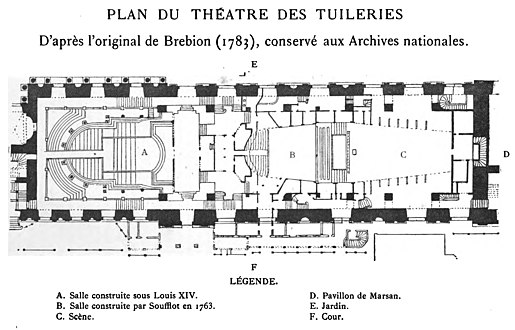
In French the left of the stage is the ‘garden side’ and the right, the ‘court side’. This dates back to when a troupe performed at the Tuileries Palace: the Louvre courtyard (cour) and the Tuileries Garden (jardin).
In Cantonese opera, the left is known as ‘side of the clothing’, the right, the ‘side of the props’. English speakers go for stage left or stage right, unless they want the audience’s perspective, which is house left and house right.
There is one other cross – the Crossfade. When lights are lowered in one part of the stage, the lights come up in another. It can apply to sound effects too. Sometimes abbreviated to Xfade. So perhaps, I’ve managed to get an X word into my post after all!




 The Quiet Writer
Interesting and very informative. I once saw someone cross the stage on hands and knees hoping not to be spotted!
LikeLiked by 1 person
I think distraction is key to not being spotted mid-crawl!
LikeLiked by 1 person